12.30.2009

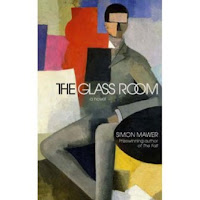
Simon Mawer's The Glass Room

I finished Mawer's The Glass Room last week before the paper torrent of Christmas began, and it's taken me this long to get to a point where I felt that I had something substantive to stay. This book is tremendous and has stuck in my mind, teasing me with different interpretations and meanings, since I closed the last page.

Set before, during, and after World War II, The Glass Room is a story of a family and their beautiful modern house. It is also the story of love lost, love found, horrible circumstances, close-mindedness and the desire to live life as one chooses. At the center of this tale are the Landauers, a wealthy and visionary couple who attempt to create a new, fresh future through the creation of a modern house. They meet their architect on their honeymoon and the ideas architect Von Abt has about architecture – the structure of space, the purpose of buildings – correspond to the Landauers world view. When the house is built, the focal point quickly becomes the glass room, a giant open space enclosed on the front by large plates of glass. They can see the city below them, but the glass room is a completely separate area, a space that speaks directly to the spirit and the best of humankind. Not everyone understands the glass room or are able to appreciate it, but when the fading rays of daylight light up the onyx wall and the room seems on fire, the glass room becomes full of possibility, full of a beauty that cannot be denied.

When Europe falls apart during WWII, the Landauers are forced to leave and the house is passed from owner to owner, as the Nazis and then the Soviets struggle with what to do with such an unconventional building. This modern house is a promise for a future that will never come, as WWII makes clear, and to be in its presence is to come face to face with the disillusionment of pre-war dreams.

Revolving around the glass room are the stories of the Landauers, their friends, and the people who inhabit the house after the Landauers leave. Though the characters are absorbing and vibrant in their lives and loves, the main character is the glass room itself, as it acts as a mirror, oracle, and reminder of disappointment to the various people who come into contact with it.

Shortlisted for the 2009 Mann Booker Prize, this is not a book to be missed. Mawer’s subtle characterization and brilliant evocation of a changing world makes this a must read.

12.18.2009

Ten Awful Truths About Book Publishing

So. I thought I'd continue the dreariness of yesterday with even more dreariness. (It's nasty outside, so we have sympathetic nature with us.) I've always thought it was better to face facts head on, and the book publishing situation is grim, but it's better to know, right? Reading this list makes one realize just how amazing books like The Help have actually done.

Scribd lists Ten Awful Truths About Book Publishing. If you still want to write a novel after reading these, then you're probably meant to.

12.17.2009

To Buy or Not to Buy...Books

This just in from Publisher’s Weekly:
According to a new survey from Bowker’s PubTrack, book buyers are cutting their book purchasing by a third this season and are tending to buy less expensive books when they do make a purchase. According to the survey released on Tuesday, Americans have reduced their book purchases by 34%, and 19% are either buying more used books or swapping books with others. Others are only buying books sold at a deep discount or waiting for hardbacks to come out in soft cover. Also, consumers are not buying books as an alternative form of entertainment, which is a direct contrast to the hope that they might.

I’ve massively cut down on my book buying since last year – ever since I discovered that my library system ROCKS. Yet, I do wonder sometimes if I should buy new releases as a sign of support for the industry, but it gets really expensive, and I’m not sure I’m going to love the books. Now, I’ve developed a system where I filter my book choices through the library, and if I like the book and figure I’ll read it again (which I usually do), then I’ll put it on my list to purchase. I’ve also decided that all the books – if I can help it – that I buy from now on will be in hardcover. I realized that I would have to do this after I had a conversation with my dad – who collects first editions – and was enlightened by the fact that soft covers only last about 40 years. I’m almost 30, and I’m going to want my library in my golden years. How upset will I be if my arthritic hands have to battle busted spines and splitting pages from years of sitting in my attic room? It’s really too much of a tragedy to contemplate, so I’m making the switch to hard covers. They have a longer shelf life.

What are your book buying habits?

12.16.2009

F. Scott Fitzgerald made bank

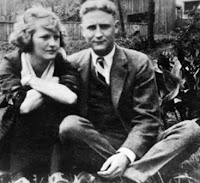
The only problem was, he didn't know how to budget. I’m a HUGE fan of F. Scott and always thought that he never made that much. Turns out, according to some old tax returns that Matthew Bruccoli saved from the trash heap, he made the equivalent of $500,000 a year in today’s dollars. Because of the income tax rules (those were the days), he only paid about 5% on his total earnings. Where did all his money go? Well, there’s that (probably apocryphal) story about F. Scott throwing dollar bills out of his convertible while he and his pal Ernest (Hemingway) were driving around one day in France; but, in actuality, the majority of his money went to paying for Zelda’s medical care. She was in and out of sanatoriums for the last 18 years of her life and some of them – like the one in Switzerland – were quite pricey.


12.14.2009

Review copies galore

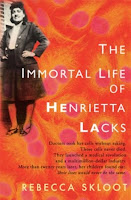
I have spent the last few weeks in the worlds of some great review copies: The Immortal Life of Henrietta Lacks by Rebecca Skloot, The Many Deaths of the Firefly Brothers by Thomas Mullen, and The Postmistress by Sarah Blake. All three officially enter the book world in late Jan/ early Feb, but I took an early look. I suspect all of these will be huge this year, but the first two are bound to be very, very popular.

The Immortal Life investigates the woman behind the most robust cell line (possibly) ever used in cell research – HeLa. Henrietta Lacks was a poor black woman and a descendent of tobacco sharecroppers, whose cells were biopsied, cultivated, and sold without her knowledge. Science writer Skloot tells the story of not only the amazing trajectory and impact of these cells on the realm of science but also the impact of their development on her family – who did not know about their mother’s contribution until 20 years after the fact. This is a provocative, well-written investigative story that will make you want to learn more about cellular biology and the intersection between science and society.

The Many Deaths of the Firefly Brothers by historical-fiction award-winning author Thomas Mullen is a brain teaser of a novel about two bank robbers during The Great Depression. The plot is fast-paced, the characters absorbing, and the themes thought-provoking. Do some criminals have hearts of gold? What does it mean to be decent or evil? Can a person really get a second chance? I finished this last week and am still thinking about it. I love books that stick around in my mind like that.

Also, I spent some time with Sarah Blake’s The Postmistress and, though mis-titled, this is a captivating book about three woman during World War II. Unfortunately, the storyline peters in the final chapters, as I kept waiting for the delivery of the “letter.” The resolution of this plot strand is anti-climactic, and perhaps the novel is done a disservice by its marketing. The Postmistress isn’t about the postmistress or letters at all – really – but about missed chances, broken relationships, and the effects of a war on distant shores. In fact, letters and postmistresses are footnotes, and it’s a shame that the novel is marketed like this. I found myself waiting for the story to deliver on the promise made on the jacket and when it didn’t, I was very disappointed. After a little thought, I realized that I if I just divorced myself from these expectations and allowed the novel to unfold before me, I enjoyed it much, much more. I encourage you to read this book – it’s very good – just don’t get wrapped up in the idea that it’s a romantic tale about letters delivered years after the fact because it emphatically is not.

More about all of these novels later, but I thought I would whet your appetites. What’s better than reading great books in gloomy February and January? Well, actually, cuddling with a new baby girl is better – which is what I’m going to be doing – but I think I’ll just read aloud to her as we cuddle. (I can’t believe there are less than 4 weeks until Miss Helen arrives, and we finally got all the books on the shelves. Mr. RRL had to build another bookshelf because – of course – we ran out of room with the first one we bought. If she’s a book collector like me, I just don’t know what we’ll do.:))
asdf
Next up: Simon Mawer's The Glass Room and Elizabeth Kostova's The Swan Thieves.

12.08.2009

Books and Food

There are few things I enjoy more than books and food, though not always together. I really hate when I get crumbs in between the pages. My blogosphere wanderings brought me to a new blog Authors in the Kitchen that features chats with favorite authors about their favorite recipes, cooking habits, etc.

This got me to thinking about the cooking blogs that I read on a regular basis – some of them very well written – and I thought I’d share them with you.

101 Cookbooks – San Francisco cook samples recipes from her vast collection of cookbooks and creates recipes of her own. The photography is awesome.

Smitten Kitchen
– My kind of cooking. Low fat, low sugar, and dieting are foreign concepts in this kitchen where taste, joy, and good eats take precedence.

Orangette – Food blogger, turned food columnist for Bon Appetite, turned restaurant owner shares her love of food.

The Wednesday Chef
– I found this one recently and am pretty excited to see what happens when the author relocates to Berlin.

Lottie + Doof - A self-proclaimed Chicago food blog, they definitely have something for everyone.

Kitchenography - Wonderful recipes. Beautiful photos.

Tea and Cookies - Bay-area writer blogs about the intersection of food and life.

12.03.2009

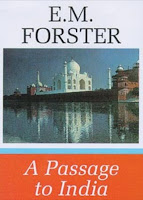
EM Forster's Passage to India

EM Forster’s most famous book is arguably A Passage to India. I use the term ‘arguably’ because I don’t agree with this, and after finishing the novel a few weeks ago, I have tried to figure out why. Harold Bloom’s observation that, though Passage is a brilliant book, "no one character is larger than the novel" begins to explain my response. Unlike Howards End, with the dashing Margaret, the conflicted Helen, the ethereal Mrs. Wilcox, no character in Passage rises from the narrative to become their own personality outside of the novel. One would never talk about a Miss Quested like they talk about Emma Bovary or Jay Gatsby. She is completely confined to the context of her novel and there remains.

This explanation partially elucidates my lukewarm reaction to the novel. I think the other has to do with the fact that Passage seems unfinished by the very nature of the themes that it contemplates. For some, this may help to explain its genius. However, if one judges this novel on structure and character presentation, one finds that it fails completely in these regards. Passage is not a perfect novel. There is far too much exposition – the main drama of the novel not appearing until almost 200 pages in – and the characters, as mentioned before are somewhat dull.

What Forster does do well, though, is depict a collision of cultures. Forster is not an imperialist and this has kept Passage on our reading lists, as opposed to Kipling, who, with his white man’s burden business, has at best been relegated to the children’s shelves and at worst been completely maligned by critics who have no use for his version of the hierarchy of cultures. Forster is sympathetic to India’s plight, but he’s measured in his presentation of both sides. Both the English and the Indians have moments of prejudice and hatred, openness and understanding. These latter gestures are what ultimately bring about the devastation of the novel. Forster’s main point is that neither side is ready to come across the divide, that the point of melding cultures, forgiving, moving forward is not yet here. (One wonders if it’s even here now.)


This notion of “not yet” puts the structure of the novel in limbo and necessitates an ambiguous ending. Clearly, Passage, like Howards End, is an idea novel, but unlike Howards End, it is not neatly packaged into a three part plot structure. Howards End ends nicely, and fittingly, at the eponymously named farm; Passage parts from the reader with an intimation of a huge comma. For Forster to tidy up the “not yet,” to bring the conclusion to the “now,” a number of things must happen – all outside the scope of the plot – and Forster chooses for reality here over fairy tale. He could have easily finished the novel with a coming together of the English and the Indian, but this would undercut the previous 300+ pages. It would force a conclusion in fiction where none could happen in life.

This unresolved ending, and Forster’s commitment to truth is, as I mentioned earlier, what many credit as the genius of the novel, and as I think about it from this perspective – divorcing myself from the personal expectation that a novel should have a definitive conclusion – I understand that this is the only way Passage could end and be considered successful.

12.02.2009

This and That

The cause of Jane Austen’s death has perplexed scholars for years, but a new perspective on her last letters may indicate that Addison’s Disease and Lymphoma were not the culprits. The Regency Lady of Letters may have actually died as a result of tuberculosis caught from cattle.

The public's obsession with Bella Swan may also be encouraging a resurgence of interest in gothic classics. Filmmakers plan to bring new versions of Wuthering Heights and Jane Eyre to the screen next year that will capitalize on the dark romance so popular in the Twilight series.

Ronlyn Domingue analyzes the disappointment of recieving a bad New York Times review.

The staff critics at the New York Times pick their top favorites of 2009.

12.01.2009

For the Readers who Have Everything...

I buy books for people every year. Who doesn’t want a book? There is something for everyone – even folks who ‘say’ they don’t like to read. Cookbooks, picture books from exotic places, fashion books: the options are endless. So, too, it would seem, are the options endless for book related items. Here are few cool things I found about the webosphere. Happy shopping.

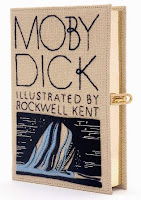
It looks like cloth-covered copy of Moby Dick, but it isn't. It's actually a purse made to look like cloth-covered copy of Moby Dick. I want. Check out Olympia Le Tan's website for more options.


asdf

;lksjdf
The Well-Dressed Reader has a variety of jewelry options for the ladies who want to advertise their book obsession. This pendant was my personal favorite.
;lkasjdf

lksjdf
Fine Books and Collections offers a Bibliophile's Shopping Guide that includes Shakespeare-themed coffee (Cafe Mam makes an Othello blend), a book lover's version of Trivial Pursuit, and a leather bound coffee table that looks like a stack of large books.